Water
Learning Objectives
- I can say how we use water every day.
- I can name the sources of water.
- I can tell the difference between clean water and dirty water.
- I can say how to save water.
Let Us Begin!
Water is very important. We cannot live without water. We drink water, cook with water, and bathe with water.
Plants and animals also need water to live. Water is a precious gift of nature.
Let us learn about water!
Uses of Water
We use water in many ways every day. Can you think of all the ways you used water today?
| Use | How We Use It |
|---|---|
| Drinking | We drink water to stay healthy. Our body needs water to work properly. |
| Cooking | We cook rice, dal, and vegetables using water. We boil water to make tea and soup. |
| Bathing | We bathe with water to keep our body clean and fresh. |
| Washing clothes | We wash our clothes with water and soap to remove dirt. |
| Watering plants | Plants need water to grow. We water them every day. |
| Putting out fires | Firefighters use water to put out fires and save lives. |
| Swimming | We swim in pools, rivers, and the sea for fun and exercise. |
Sources of Water
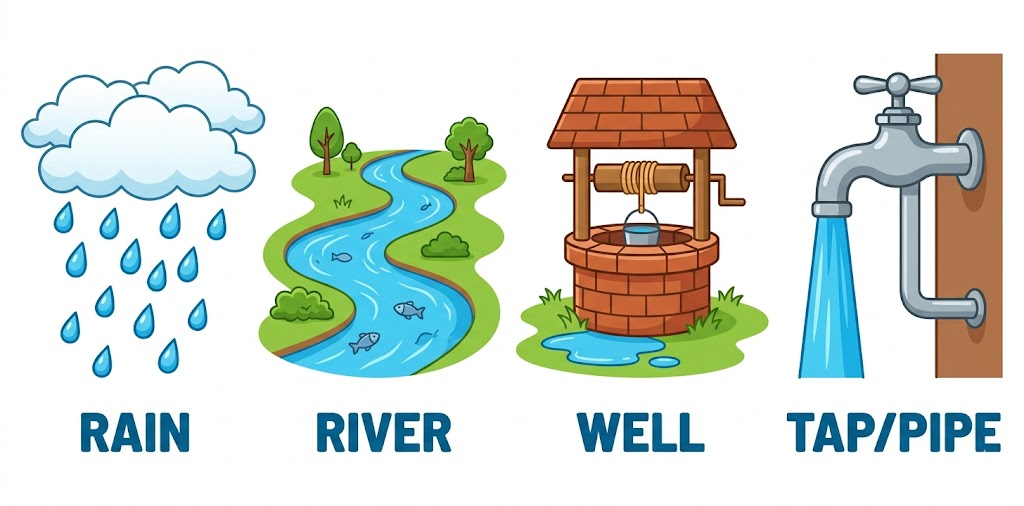
Where does water come from? Here are the main sources:
| Source | About It |
|---|---|
| Rain | Rain falls from clouds. It fills rivers, ponds, and wells. Rain is the main source of all water on Earth. |
| Rivers | Rivers carry water from mountains to the sea. The Ganga, Yamuna, and Brahmaputra are major rivers of India. We get water from rivers. |
| Well | Water is found under the ground. We dig wells to get this groundwater. Many villages use wells. |
| Ponds and Lakes | Ponds and lakes collect rainwater. Animals drink from them. Farmers use pond water for crops. |
| Tap / Pipe | Water is treated at a water plant to make it clean, then piped to our homes through taps. |
Clean Water and Dirty Water
Clean water is safe to drink. It has no colour, no smell, and no taste. We get clean water from taps and filtered water.
Dirty water has mud, germs, or waste in it. We should never drink dirty water. It can cause serious diseases like cholera and typhoid.
| Clean Water | Dirty Water |
|---|---|
| Clear and transparent | Muddy or cloudy |
| No smell | Has a bad smell |
| No taste | May taste bad |
| Safe to drink | Not safe to drink |
| From filtered tap or well | From dirty pond or drain |
1. Boil the water for at least 5 minutes to kill germs.
2. Use a water filter to remove dirt and germs.
3. Use water purification tablets when travelling.
4. Always store drinking water in a clean, covered container.
How to Save Water
Water is precious. There is only a limited amount of clean water on Earth. We must not waste it. Here is how we can save water:
- Close the tap while brushing your teeth.
- Use a bucket instead of a shower — it uses much less water.
- Water plants in the morning or evening, not in the hot afternoon (water evaporates quickly in heat).
- Fix leaking taps — a dripping tap wastes hundreds of litres every day!
- Collect rainwater in a bucket or tank to water plants.
- Do not play with water or leave taps running.
- Use a mug to wash utensils instead of running water.
A leaking tap can waste up to 20 litres of water every day. That is enough water for a person to drink for 10 days! Always tell an adult if you see a leaking tap.
Key Words
| Word | Meaning |
|---|---|
| Source | The place where something comes from |
| Clean water | Water that is safe to drink — no colour, smell, or dirt |
| Dirty water | Water with mud, germs, or waste — not safe to drink |
| Save water | To use water carefully and not waste it |
| Precious | Very important and valuable |
| Groundwater | Water found under the ground, reached by digging wells |
| Rainwater harvesting | Collecting and storing rainwater for later use |
| Cholera / Typhoid | Diseases caused by drinking dirty water |
| Filter | A device that removes dirt and germs from water |
- Water is very important. We cannot live without water.
- We use water for drinking, cooking, bathing, washing, and watering plants.
- Water comes from rain, rivers, wells, ponds, and taps.
- The Ganga, Yamuna, and Brahmaputra are major rivers of India.
- Clean water is clear, tasteless, and odourless. Always drink boiled or filtered water.
- Dirty water can cause diseases like cholera and typhoid.
- We must save water — close taps, use buckets, fix leaks, collect rainwater.
Finished learning? Now test what you know!