Materials Around Us
Learning Objectives
- I can explain what a material is and give examples.
- I can tell the difference between natural and man-made materials.
- I can describe properties of materials (hard/soft, rough/smooth, transparent/opaque).
- I can name common materials and things made from them.
- I can explain why certain materials are chosen for certain objects.
- I can describe how to Reduce, Reuse, and Recycle materials.
What Are Materials?
Look around you! Everything you see — your desk, your pencil, your water bottle, your clothes — is made of some material.
A material is what an object is made of. For example, a chair can be made of wood, plastic, or metal. The wood, plastic, or metal is the material.
Different materials have different qualities. That is why we choose the right material to make the right thing!
Natural Materials vs Man-Made Materials
Materials can be divided into two groups based on where they come from:
| Natural Materials | Man-Made Materials |
|---|---|
| Found in nature (not made by humans) | Made by humans in factories |
| Wood, cotton, wool, silk, jute, clay, stone, leather | Plastic, glass, nylon, cement, steel, rubber (synthetic) |
| Come from plants, animals, or the earth | Made from chemicals or by processing natural materials |
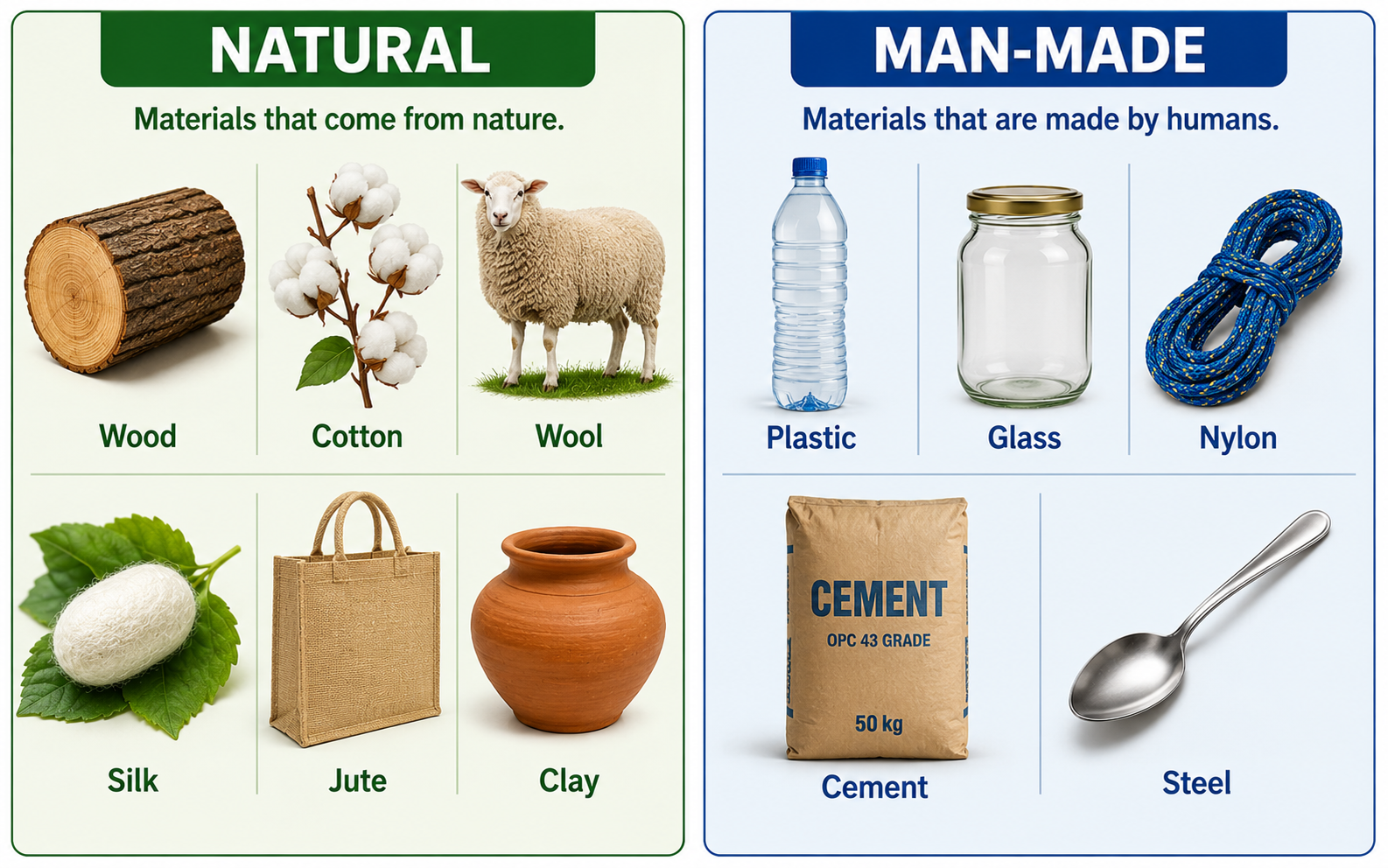
Examples of Natural Materials and Their Sources
| Material | Source | Type |
|---|---|---|
| Wood | Trees (teak, neem, mango) | Plant |
| Cotton | Cotton plant | Plant |
| Jute | Jute plant | Plant |
| Silk | Silkworm cocoon | Animal |
| Wool | Sheep, goat (Pashmina) | Animal |
| Leather | Animal skin | Animal |
| Clay | Earth / soil | Earth |
| Stone / Marble | Rocks, mountains | Earth |
Properties of Materials
Every material has special qualities called properties. These properties help us decide which material to use for what purpose.
1. Hard and Soft
| Hard Materials | Soft Materials |
|---|---|
| Cannot be pressed or scratched easily | Can be pressed, squeezed, or bent easily |
| Iron, stone, wood, glass, diamond | Cotton, sponge, rubber, clay, wool |
2. Rough and Smooth
| Rough Materials | Smooth Materials |
|---|---|
| Feel uneven when you touch them | Feel even and flat when you touch them |
| Sandpaper, brick, tree bark, jute bag | Glass, silk, plastic, polished marble |
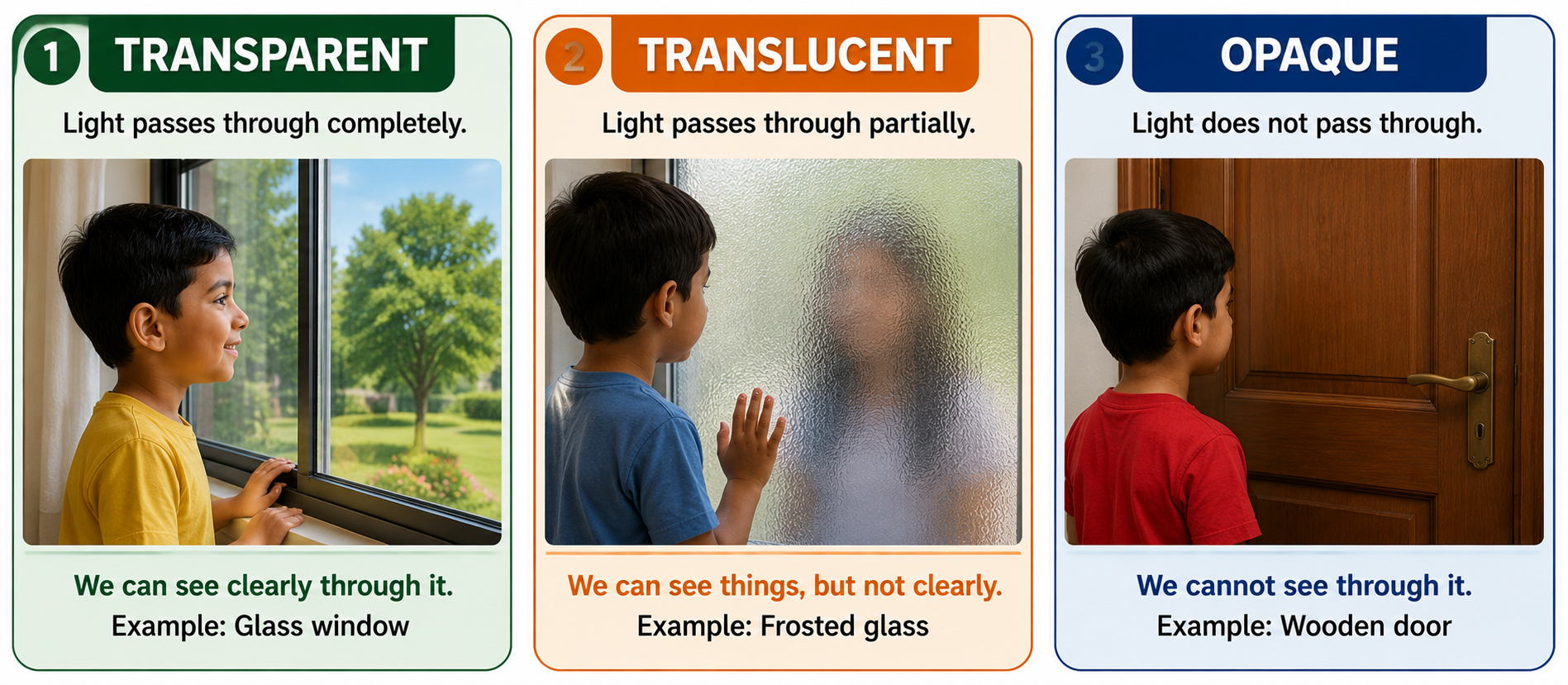
3. Transparent, Translucent, and Opaque
| Type | Meaning | Examples |
|---|---|---|
| Transparent | You can see clearly through it | Clear glass, clean water, air |
| Translucent | Some light passes, but you cannot see clearly | Frosted glass, oiled paper, thin cloth |
| Opaque | No light passes through; you cannot see through it | Wood, metal, stone, cardboard |
4. Soluble and Insoluble
| Soluble | Insoluble |
|---|---|
| Dissolves (mixes completely) in water | Does not dissolve in water |
| Salt, sugar, lemon juice, ink | Sand, stone, oil, plastic, chalk powder |
5. Magnetic and Non-Magnetic
| Magnetic | Non-Magnetic |
|---|---|
| Attracted by a magnet | Not attracted by a magnet |
| Iron, steel, nickel, cobalt | Wood, plastic, glass, rubber, aluminium, copper |
Common Materials and Their Uses
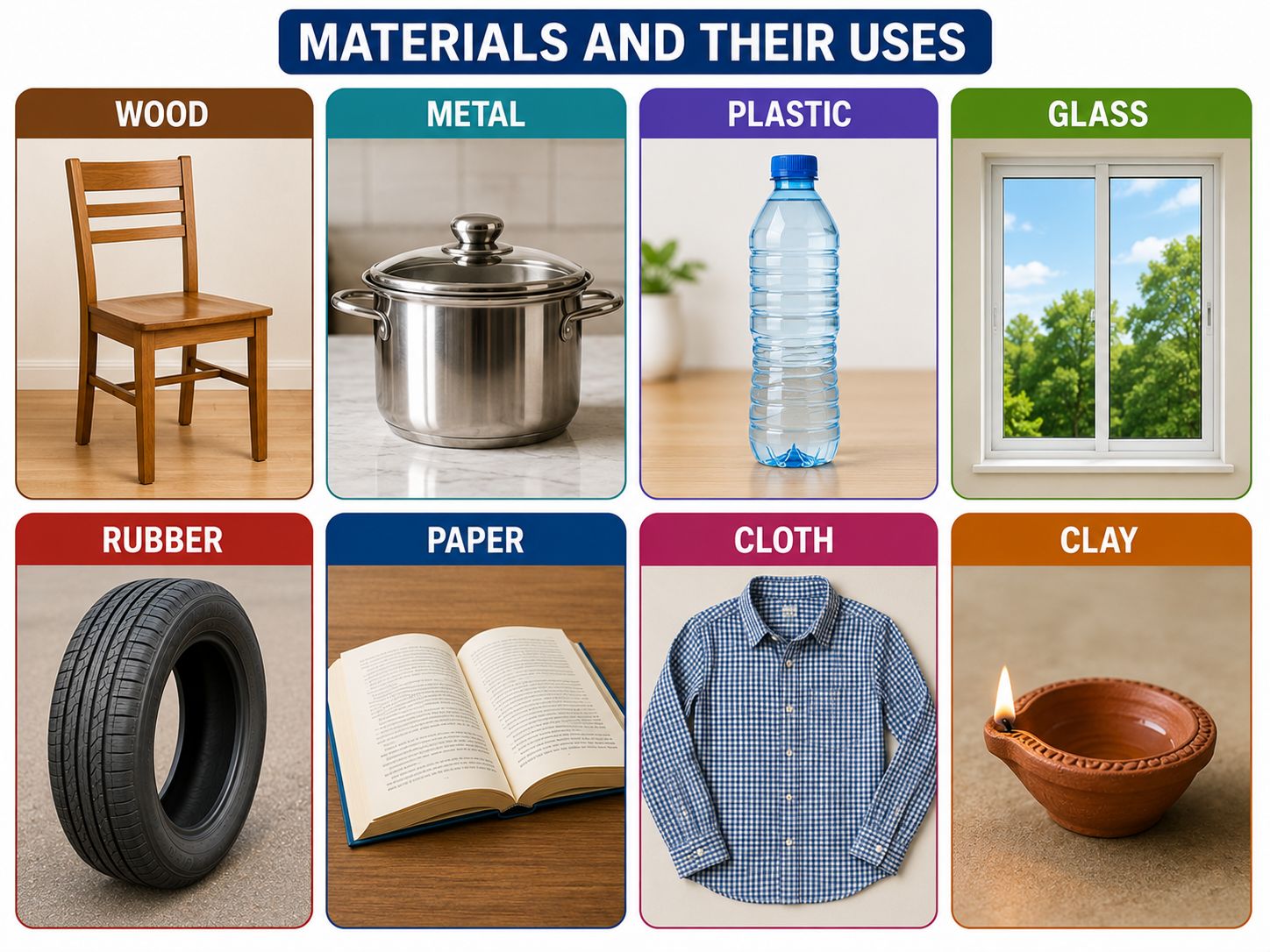
Let us learn about the most common materials we use every day:
| Material | Properties | Common Uses |
|---|---|---|
| Wood | Hard, strong, opaque, can be cut and shaped | Furniture, doors, boats, pencils, cricket bat |
| Metal (Iron/Steel) | Very hard, strong, shiny, conducts heat, magnetic | Cooking vessels, tools, bridges, railway tracks |
| Plastic | Light, waterproof, flexible, does not rust | Bottles, bags, toys, buckets, chairs |
| Glass | Transparent, smooth, hard, brittle (breaks easily) | Windows, mirrors, spectacles, bottles, bulbs |
| Rubber | Soft, flexible, waterproof, bouncy | Tyres, erasers, balloons, gloves, rubber bands |
| Paper | Light, thin, smooth, can be folded, burns easily | Books, newspapers, notebooks, kites, bags |
| Cloth (Fabric) | Soft, flexible, can be stitched, absorbs water | Clothes, curtains, bags, towels, flags |
| Clay | Soft when wet, hard when baked, can be moulded | Pots, diyas, bricks, tiles, idols |
What Are Things Made Of?
Most objects around us are made from one or more materials. Can you match these objects to their materials?
| Object | Material(s) |
|---|---|
| School desk | Wood and metal (iron) |
| Water bottle | Plastic or glass or steel |
| Window | Glass and wood/aluminium (frame) |
| Cooking pot (patila) | Steel or aluminium |
| Rubber band | Rubber |
| Notebook | Paper |
| School uniform | Cotton cloth |
| Diya (lamp) | Clay |
| Cricket bat | Wood (willow) |
| Spectacles | Glass (lens) and plastic/metal (frame) |
Choosing the Right Material
We choose materials carefully based on their properties. The wrong material can make an object useless or even dangerous!
| Object | Material Used | Why This Material? |
|---|---|---|
| Windows | Glass | Transparent — lets light in so we can see outside |
| Cooking pots | Steel / Aluminium | Conducts heat well, does not burn, strong |
| Tyres | Rubber | Flexible, bouncy, grips the road, does not break |
| Raincoat | Plastic / Nylon | Waterproof — does not let water pass through |
| Electric wires (covering) | Plastic / Rubber | Does not conduct electricity — keeps us safe |
| Bridges | Steel and concrete | Very strong, can hold heavy weight |
| Books | Paper | Light, smooth, easy to write on, can be folded |
| Umbrella | Cloth/nylon (top) + metal (frame) | Waterproof top + strong frame |
Why don't we make windows from wood? Because wood is opaque — light cannot pass through it. We need glass because it is transparent.
Why don't we make cooking pots from plastic? Because plastic melts when heated! Metal can handle high heat without melting.
Why don't we make tyres from glass? Because glass is brittle — it would break on bumpy roads! Rubber is flexible and bouncy.
Reduce, Reuse, Recycle
Many materials (especially plastic) harm our environment. We must follow the 3 Rs to protect our Earth:
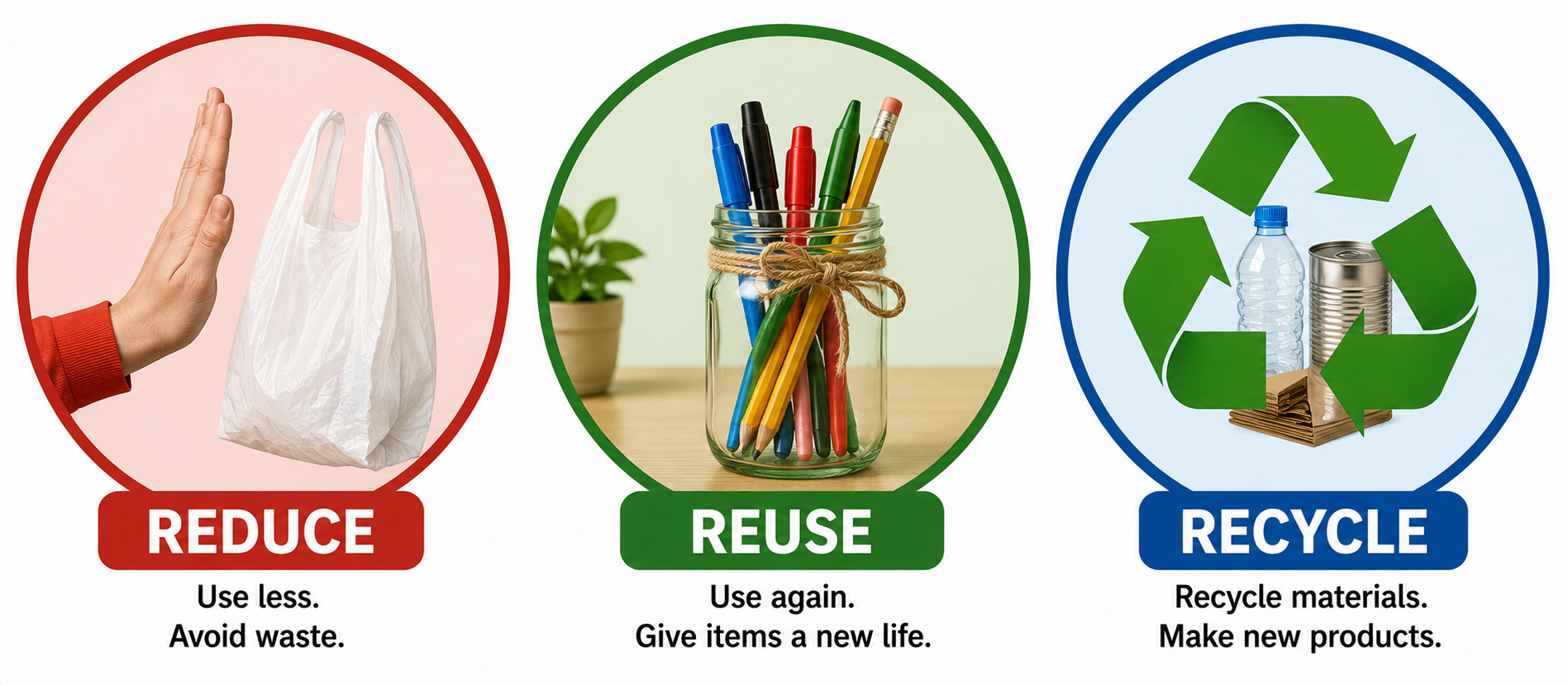
| The 3 Rs | Meaning | Examples |
|---|---|---|
| Reduce | Use less material; avoid waste | Carry a cloth bag instead of taking plastic bags; use both sides of paper |
| Reuse | Use the same thing again instead of throwing it away | Use old jars as pen holders; give old clothes to others; refill water bottles |
| Recycle | Turn old materials into new products | Old newspapers → new paper; plastic bottles → new plastic items; metal cans → new metal |
Key Words
| Word | Meaning |
|---|---|
| Material | What an object is made of (e.g., wood, plastic, metal) |
| Natural | Found in nature; not made by humans |
| Man-made (Synthetic) | Made by humans in factories |
| Transparent | Light passes through; you can see clearly (glass) |
| Opaque | Light cannot pass through (wood, metal) |
| Translucent | Some light passes; blurry view (frosted glass) |
| Soluble | Dissolves in water (salt, sugar) |
| Insoluble | Does not dissolve in water (sand, plastic) |
| Magnetic | Attracted by a magnet (iron, steel) |
| Brittle | Breaks easily when dropped (glass, clay) |
| Flexible | Can be bent without breaking (rubber, cloth) |
| Recycle | Turn old/used materials into new products |
- A material is what an object is made of.
- Natural materials come from nature (wood, cotton, wool, silk, clay, stone).
- Man-made materials are made in factories (plastic, glass, nylon, cement).
- Properties of materials: hard/soft, rough/smooth, transparent/opaque, soluble/insoluble, magnetic/non-magnetic.
- Common materials: wood, metal, plastic, glass, rubber, paper, cloth, clay.
- We choose materials based on their properties (glass for windows, metal for cooking, rubber for tyres).
- Follow the 3 Rs: Reduce, Reuse, Recycle to protect our environment.
Finished learning? Now test what you know!