Insects
Learning Objectives
- I can identify an insect by its six legs, three body parts, and antennae.
- I can name the three main body parts of an insect — head, thorax, and abdomen.
- I can classify insects as helpful or harmful with examples.
- I can describe the life cycle of a butterfly (metamorphosis).
- I can explain how insects help us (pollination, honey, silk) and harm us (diseases, crop damage).
- I can name common insects found in India and their characteristics.
Introduction
Have you ever watched ants marching in a line? Or seen a colourful butterfly sitting on a flower? These tiny creatures are called insects!
Insects are the largest group of animals on Earth. There are more insects than all other animals combined! India alone has over 60,000 different types of insects.
Some insects help us by making honey and silk, while others can spread diseases. Let us learn all about these amazing tiny creatures!
What are Insects?
Insects are small animals that have some special features that make them different from other creatures:
- Six legs — All insects have exactly 6 legs (3 pairs). This is the most important feature!
- Three body parts — Head, Thorax (middle), and Abdomen (back)
- Antennae — Two feelers on the head to smell, touch, and sense direction
- Wings — Most insects have wings (usually 2 or 4), but some do not (like ants)
- Exoskeleton — A hard outer covering that protects their soft body
- Compound eyes — Eyes made of many tiny lenses
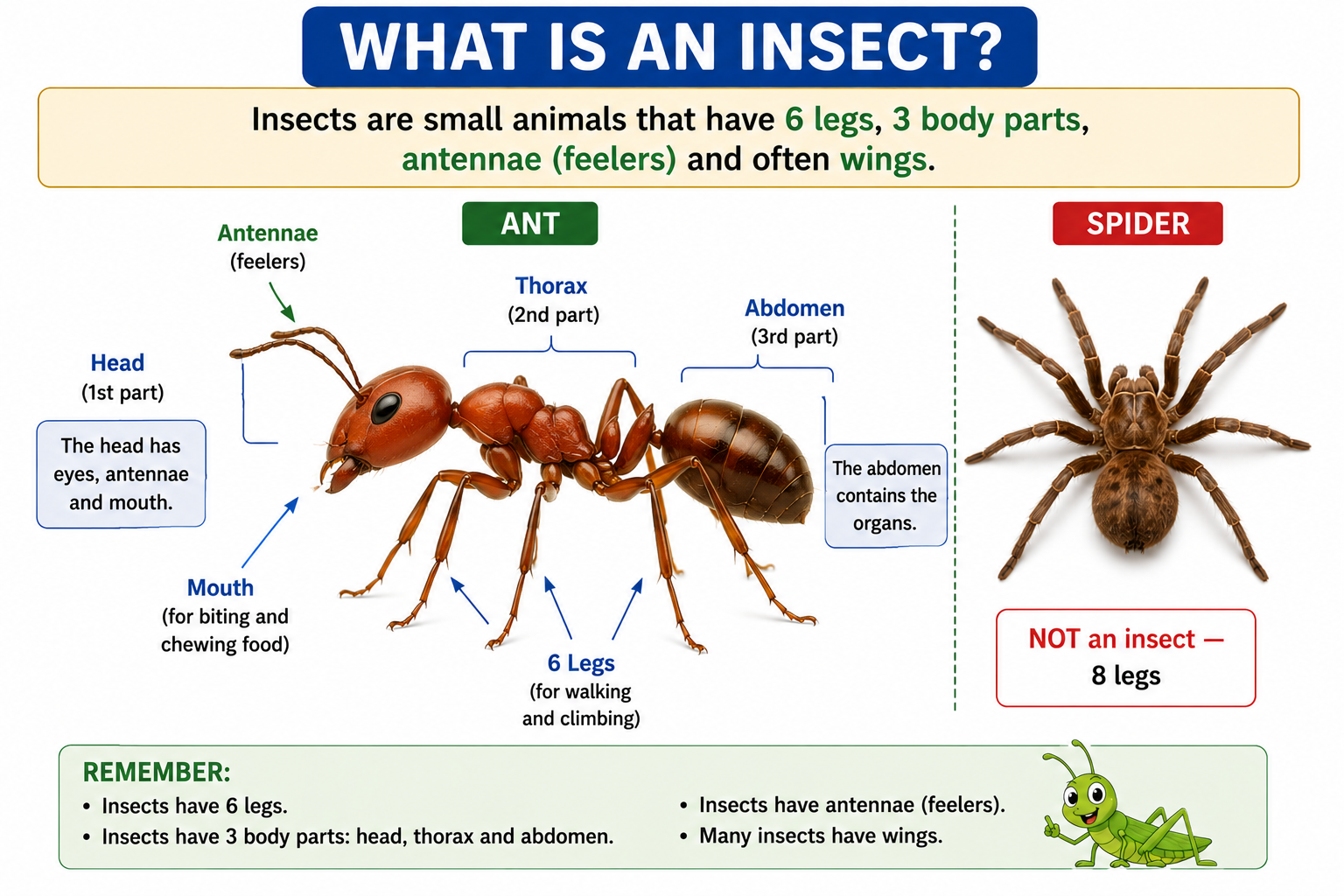
Body Parts of an Insect
Every insect's body is divided into three main parts:
| Body Part | Location | What It Contains |
|---|---|---|
| Head | Front | Eyes (compound eyes), Antennae (feelers), Mouth parts (for biting, sucking, or licking) |
| Thorax | Middle | 3 pairs of legs (6 legs total), Wings (if present — usually 2 or 4 wings) |
| Abdomen | Back | Stomach, breathing holes (spiracles), stinger (in bees/wasps) |
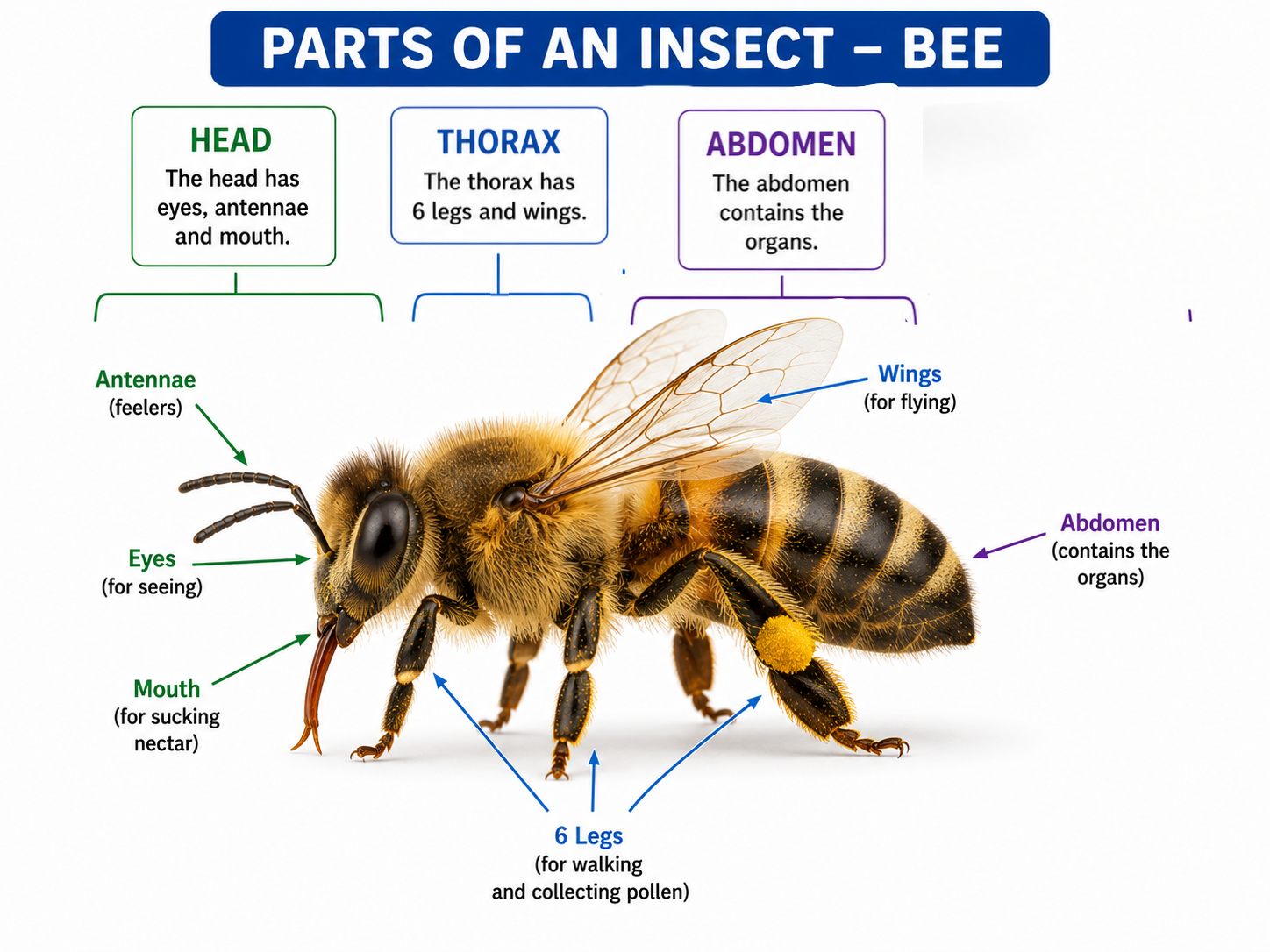
Types of Insects
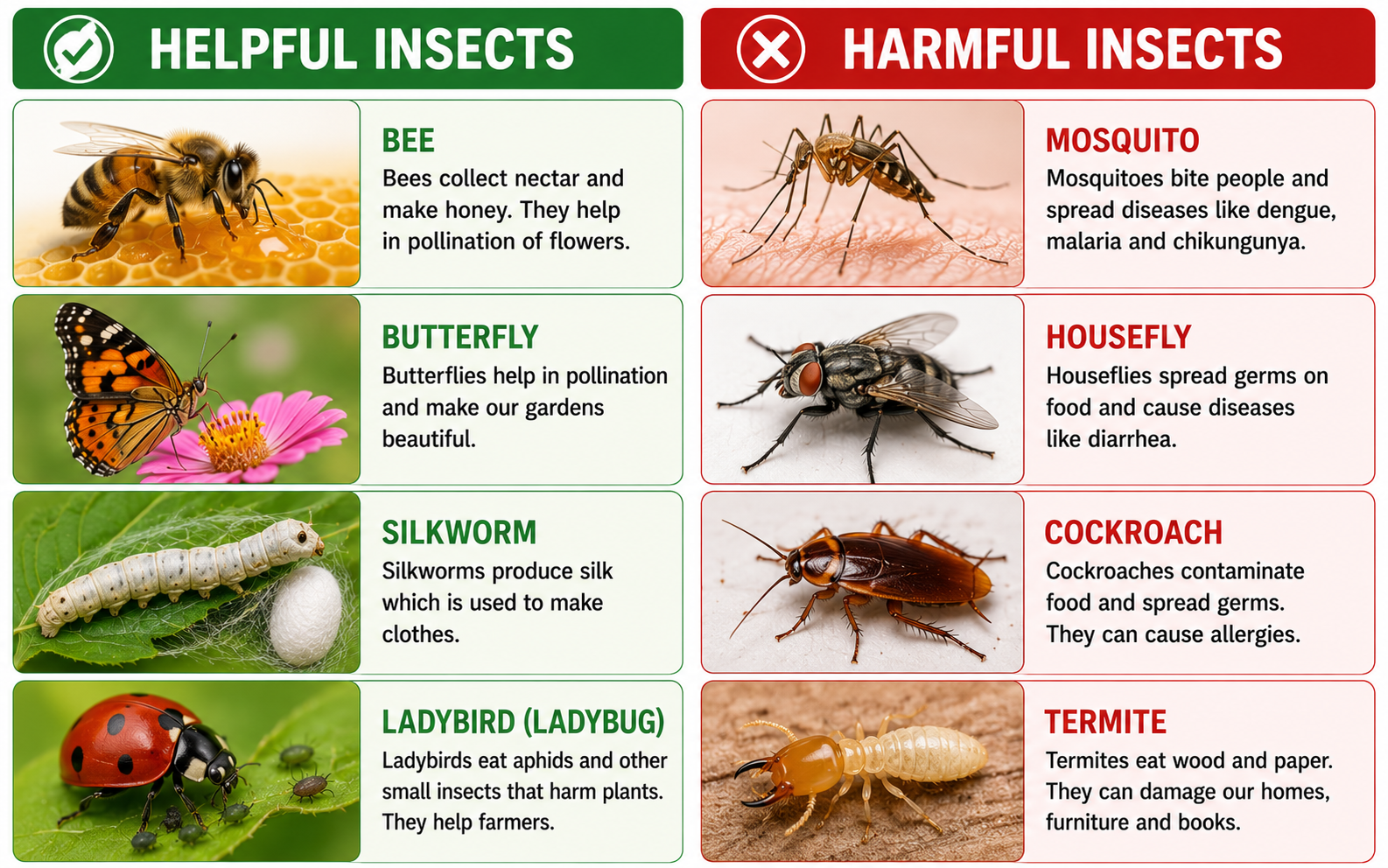
We can group insects into helpful insects and harmful insects:
🌿 Helpful Insects
| Insect | How It Helps Us |
|---|---|
| 🐝 Honeybee | Makes honey and beeswax; pollinates flowers so fruits and vegetables grow |
| 🦋 Butterfly | Pollinates flowers; makes gardens beautiful |
| 🐛 Silkworm | Makes silk thread — India is the 2nd largest silk producer in the world! |
| 🐞 Ladybird (Ladybug) | Eats harmful aphids that destroy crops; farmer's friend |
⚠️ Harmful Insects
| Insect | How It Harms Us |
|---|---|
| 🦟 Mosquito | Spreads malaria, dengue, and chikungunya — very common in India |
| 🪰 Housefly | Sits on dirty things and spreads germs; causes cholera, typhoid, diarrhoea |
| 🪳 Cockroach | Spreads germs in kitchens; causes food poisoning and allergies |
| 🐜 Termite (White Ant) | Eats and destroys wooden furniture, books, and buildings |
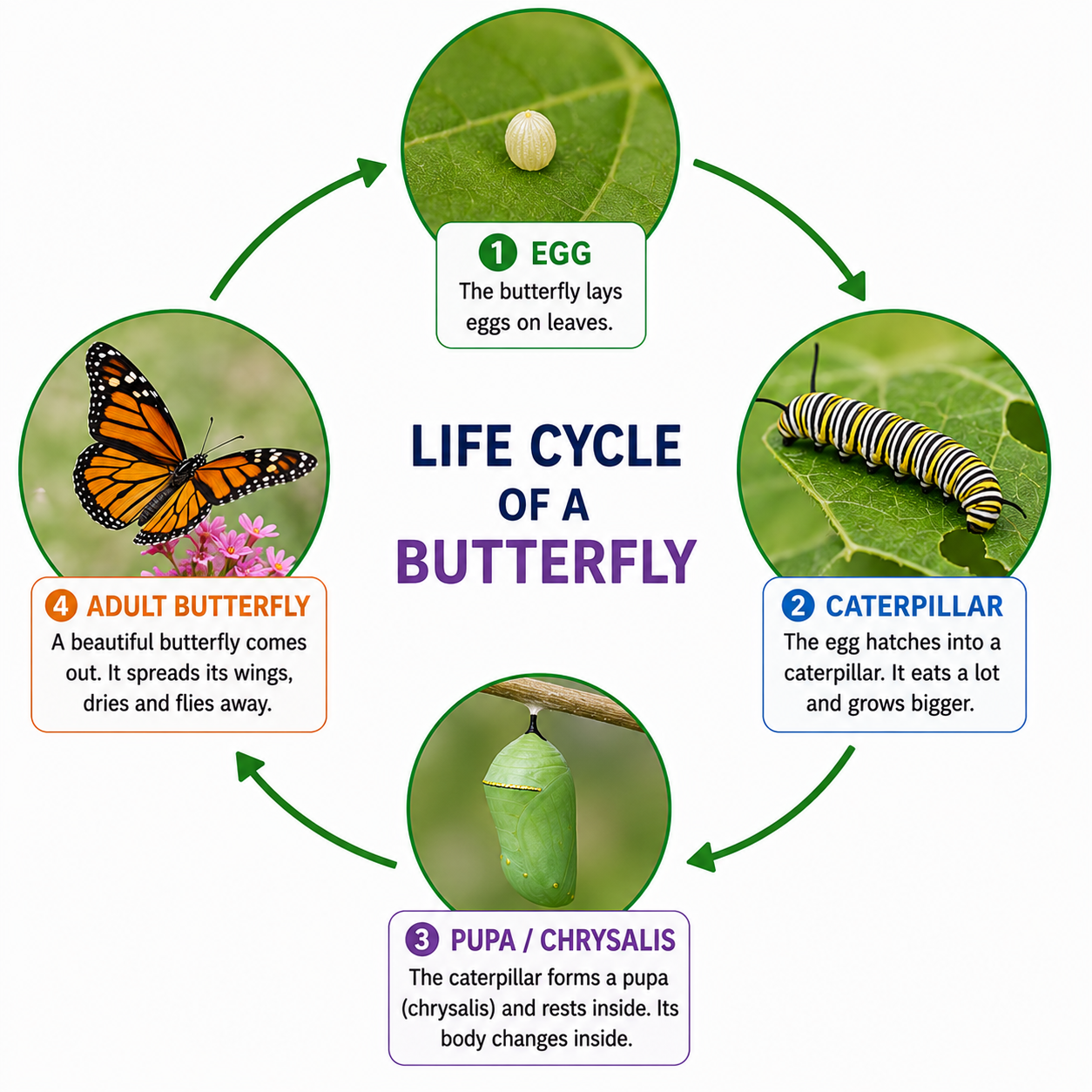
Life Cycle of a Butterfly (Metamorphosis)
A butterfly goes through four stages in its life. This amazing change is called metamorphosis:
| Stage | Name | What Happens |
|---|---|---|
| Stage 1 | Egg | The mother butterfly lays tiny eggs on leaves. |
| Stage 2 | Larva (Caterpillar) | A caterpillar hatches from the egg. It eats leaves and grows bigger. |
| Stage 3 | Pupa (Chrysalis) | The caterpillar wraps itself in a hard case. Inside, its body changes completely. |
| Stage 4 | Adult (Butterfly) | A beautiful butterfly comes out with colourful wings and flies away! |
How Insects Help Us
- Pollination: Bees and butterflies carry pollen from one flower to another. This helps plants make fruits and seeds. Without pollination, we would not have mangoes, apples, or mustard!
- Honey: Honeybees make delicious honey. India produces over 1 lakh tonnes of honey every year. States like Rajasthan, Punjab, and West Bengal are major honey producers.
- Silk: Silkworms spin silk thread to make their cocoons. We use this silk to make beautiful sarees and clothes. Karnataka, Andhra Pradesh, and West Bengal are famous for silk in India.
- Food chain: Insects are food for birds, frogs, lizards, and fish. Without insects, many animals would have nothing to eat!
- Soil health: Ants and beetles dig tunnels in soil, making it loose and healthy for plants to grow.
How Insects Harm Us
- Spreading diseases: Mosquitoes spread malaria and dengue fever — these are very common in India, especially during the monsoon season. Houseflies spread cholera and typhoid.
- Damaging crops: Locusts (tiddi dal) can destroy entire fields of crops in hours. Bollworms damage cotton crops. Stem borers attack rice and sugarcane.
- Destroying property: Termites eat wooden furniture, doors, and even books. They cause crores of rupees in damage every year in India.
- Biting and stinging: Wasps and bees can sting painfully. Some people are allergic to insect stings.
- Spoiling food: Cockroaches and houseflies contaminate food by sitting on it with dirty legs.
Interesting Facts About Insects
- 🐜 An ant can carry objects 50 times its own body weight!
- 🦗 A grasshopper can jump 20 times the length of its own body.
- 🐝 A honeybee visits about 2,000 flowers every day to collect nectar.
- 🪲 The Hercules beetle is one of the strongest insects — it can lift 850 times its weight.
- 🦟 Only female mosquitoes bite humans. Male mosquitoes drink flower nectar.
- 🦋 Butterflies taste with their feet!
- 💡 Fireflies (jugnu) produce their own light — they are common in Indian forests during monsoon.
Key Words
| Word | Meaning |
|---|---|
| Insect | A small animal with 6 legs, 3 body parts, and antennae |
| Antennae | Two feelers on an insect's head used to smell and sense things |
| Thorax | The middle part of an insect's body where legs and wings are attached |
| Abdomen | The back part of an insect's body containing the stomach |
| Metamorphosis | The complete change in body form during an insect's life cycle |
| Larva | The second stage (caterpillar) in a butterfly's life cycle |
| Pupa | The third stage (chrysalis) when the caterpillar changes into a butterfly |
| Pollination | Carrying pollen from one flower to another to help plants make fruits |
| Exoskeleton | The hard outer covering that protects an insect's body |
| Cocoon | A silk case spun by a silkworm or caterpillar around itself |
- Insects have 6 legs, 3 body parts (head, thorax, abdomen), and antennae.
- The three body parts are: Head (eyes, antennae, mouth), Thorax (legs, wings), Abdomen (stomach).
- Helpful insects: Honeybee (honey, pollination), Butterfly (pollination), Silkworm (silk), Ladybird (eats pests).
- Harmful insects: Mosquito (malaria, dengue), Housefly (germs), Cockroach (food poisoning), Termite (destroys wood).
- A butterfly's life cycle has 4 stages: Egg → Larva (Caterpillar) → Pupa (Chrysalis) → Adult Butterfly.
- Insects help through pollination, making honey and silk, and being part of the food chain.
- Insects harm by spreading diseases (malaria, dengue), damaging crops, and destroying property.
Finished learning? Now test what you know!